Pepper and NAO show off at Cité des Sciences et de l’Industrie
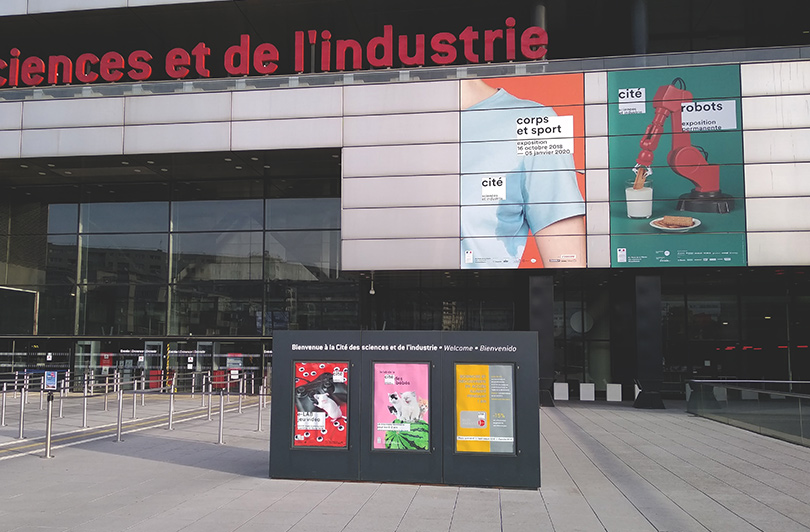
The new permanent exhibition allows us to present authentic working robots
The Cité des Sciences et de l'Industrie, monster in the field of scientific exhibitions in Paris, chose robotics as the subject of its latest permanent exhibition, and SBR is one of their partners.
[Reportage] Experiments and discoveries for everyone
In the hall of the big Cité, posters with quirky visuals call out for visitors to visit spaces made into interactive experiments, full of varied elements and immersive devices, where visitors can actively ponder on thematics such as the relationship between body and sports, the brain, video games and disabilities, huts or robots.
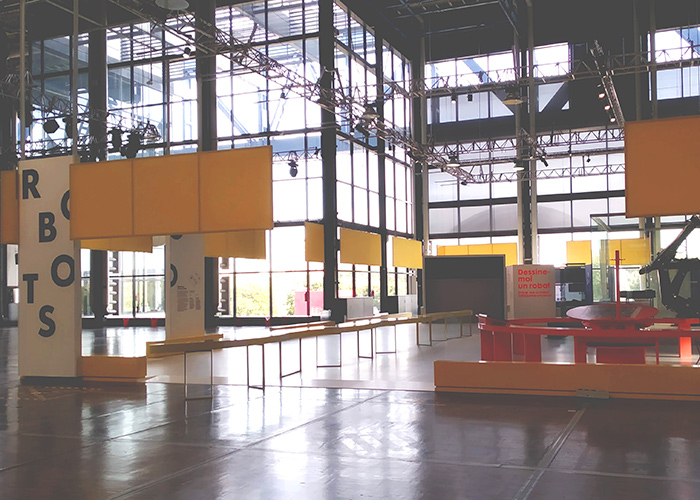 Robotics is a prominent figure of this panel of curiosities. Workshops are available for kids from 7 to 12, who can build robots with the famous stackable little plastic bricks, then program and pilot their robotic creations. Parents can visit the nearby mall to get what they need to continue the experiment at home.
Robot or not?
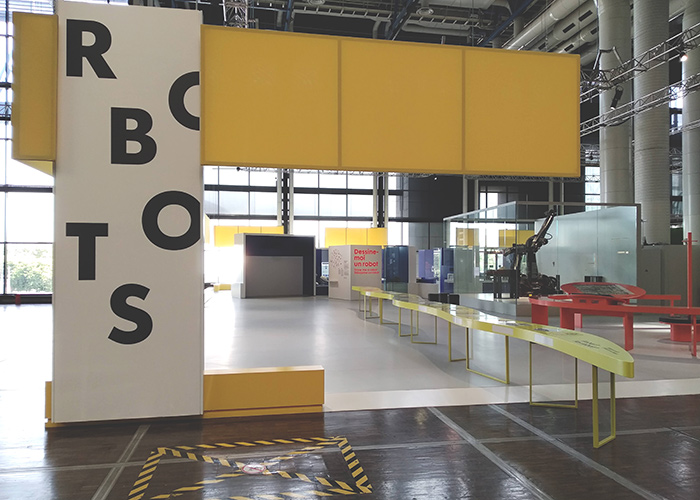
The huge hall all made of glass and metal beams of the Cité des Sciences et de l’Industrie also welcomes a permanent exhibition open to the public (open from the 2nd of April and set to last 5 years). This museographical space wants to allow visitors to grasp the challenges of modern robotics, evaluate its place in their daily lives and finally ask themselves: but what is a real robot?
Pepper and NAO show off
The exhibition curators, museographers, scenographers and graphists worked with a scientific committee composed of roboticians to design a 900 square meters playful and educational circuit.
Scientific mediation devices
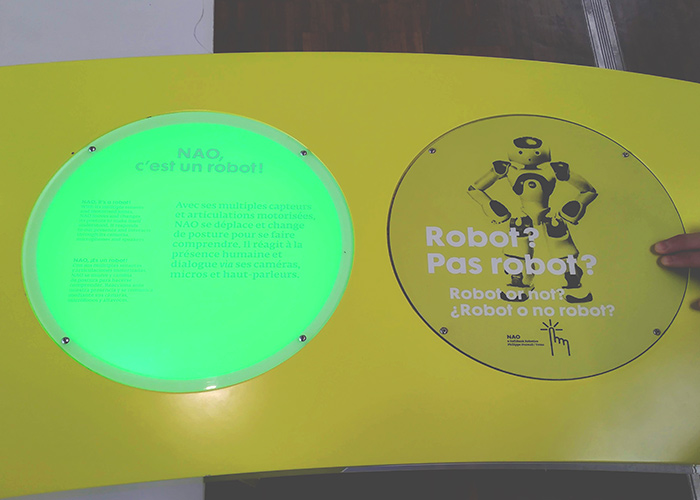
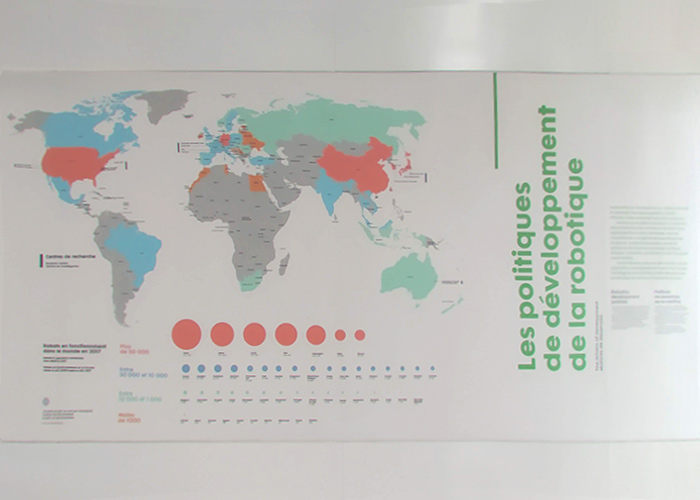
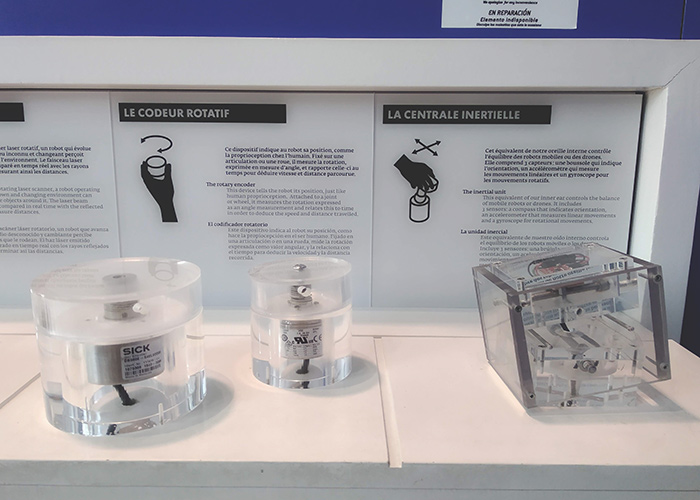
Along the path, visitors will come across several mediation devices explaining the current subject. Each of the robots in the exposition has his own cartel giving relevant information in three languages plus braille. A map shows the repartition of the robots in the world, and panels display notions of robotics and electro-mecanic devices to the visitors.
Videos recall the history of robotics, for example “Draw me a robot”, which goes all the way back to Antiquity to retrace the first steps of robotics (more automatons than robots at the time) and identifies the real beginning of robotics as Joseph Engelberger and Georges Devol’s meeting in 1956.
The Asimov-aficionado industrialist and the engineer with several inventions got together to create Unimate, the first industrial robot marketed in 1961 (fun fact: some industrials in this field and exhibition partners appeared before the advent of the internet and new technologies: Kuka was founded in Augsbourg in 1898, Schunk in 1945, Fanuc was created in 1956).
Finally, the exhibit ends with a documentation space animated by NAO himself!
Visitors are the focus of an interactive exhibition
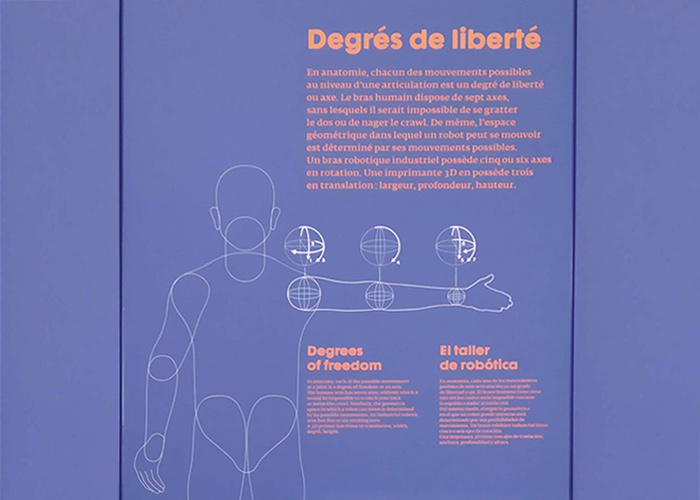
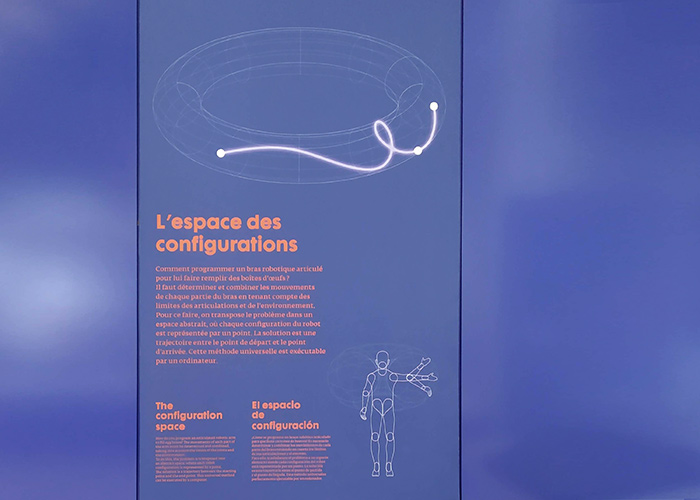
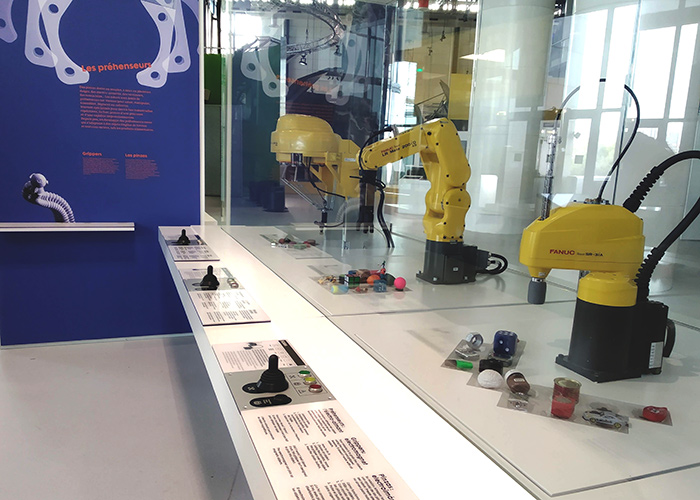
A series of interactive devices allow visitors to interact directly with the behaviour of some elements of the exhibition. A video offers to disassemble an industrial robot on a tactile screen to obtain an exploded view of all the robot’s parts. A bit further, among other manipulations, the visitor will be able to play bumper robots with Roombas or to handle a joystick controlling Fanuc arms equipped with various grippers (electromagnets, tentacles or suction pads). Applications (developed by MathWorks, a R&D solution software publisher) allow visitors to understand the notions of degrees of freedom and configuration space, and to discover the currently used range of sensors.
A varied robots fauna
But the main asset of this little robotic zoo is that it allows visitors to see a great variety of robots from different manufacturers. Kuka’s industrial arms (produced by the worldwide automation manufacturer - 3.5 billion euros in turnover, 14 200 employees in Europe - provider of intelligent automation solutions for cars, logistics and e-commerce industries for example) rub shoulders with 4 Fanuc robots (this manufacturer provides 140 models of industrial robots able to lift from 500g to up to 2.3 tons, produced in Japan by factories which are themselves entirely automated). This giant in the field of industrial robotics displays the Delta M-1iAo.5S (designed for handling very small items at a very high speed), the Scara SR3iA (for the assembly of heavy loads), the polyarticulated and multipurpose LR Mate 200iD4S (for filling, labelling and cutting, the best-selling robot in the world) and the CR7iA7I, designed to collaborate with operators (they’re then called cobots, for “collaborative robots”) and able to stop at the slightest contact.
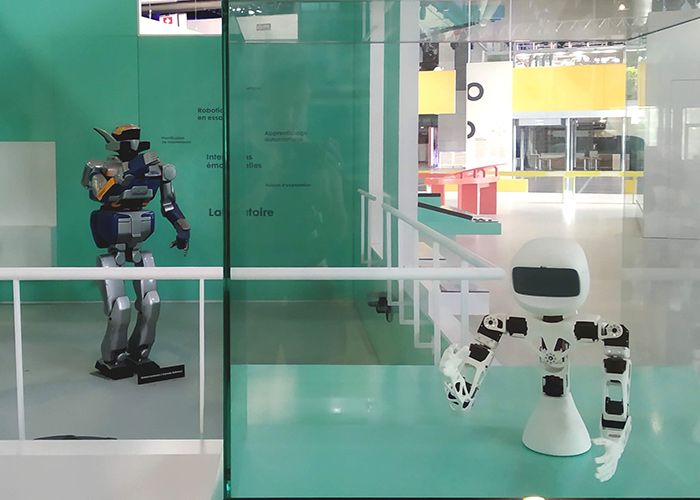
Across from the industry, research is represented by HRP2, a popular research humanoid with a deliberately futuristic look (Kawada Industries and AIST, Japan, 2002), Poppy (Inria), a swarm of Kilobots (Harvard University, 2010), a cobot (Fanuc) and… Pepper!
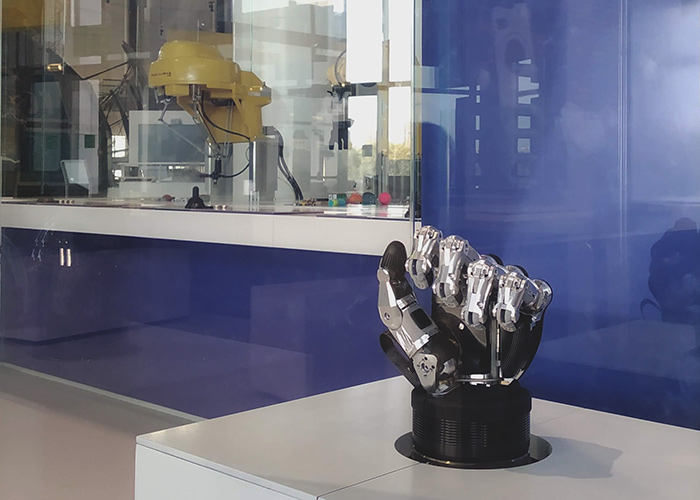
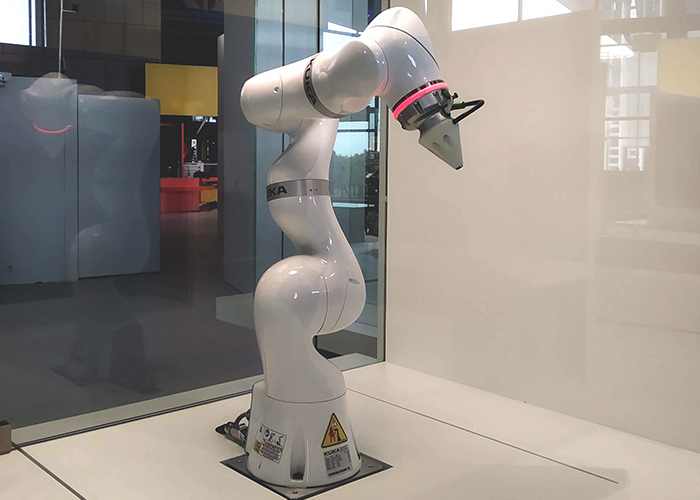
Further on in the exhibit, visitors can find very beautiful pieces, like the bio-inspired Schunck robotic hand (20 joints, 9 motors) or the very elegant LBR iiwa and its sophisticated joint torque sensors. An artistic installation from the choreographer Aurélien Bory (the compagnie 111 makes robots dance since 2009) makes us pause and think about the relationship between art and technique.
 Among these robots, NAO and Pepper show an attractive humanoid design, and the richness of the interactions between man and machine makes them effective mediation tools.
Pepper and NAO, real exhibitions mediators
SBR humanoid robots are simultaneously a mediation tool, interactive devices, programmable machines which interact with their environment, and beautiful machines that attract the visitors thanks to their humanoid shapes and their qualitative interactions.
These qualities have allowed SBR to co-conceive 3 exhibition elements in partnership with Universciences, the public establishment co-created by both the Palais de la Découverte and the Cité des Sciences et de l’Industrie: 1. Robots-portraits 2. Artificial emotions 3. The robotic exhibition animated by NAO
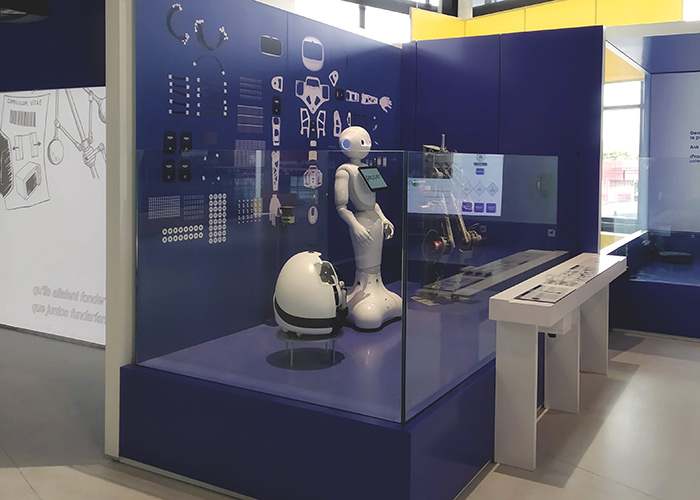
Robot-portrait, what is a robot made of?
About: What is a robot made of, and how does it work? Be they research objects, leisure or production tools, robots have a lot of things in common: a set of sensors to perceive their environment, actuators and effectors to interact, a calculation unit to coordinate everything, and an energy source. When we look at it like that, the vacuum cleaner and the humanoid are all part of the same family.
Synopsis: Pepper talks to the audience as a whole to explain how three different robots work: Rabbit, the research robot (CNRS), Keecker, the public service robot (Keecker) and himself. He defines the use for which he was conceived, then shows and explains the different sensors and actuators with which he’s been equipped. He also explains how he works and how his components are organized.
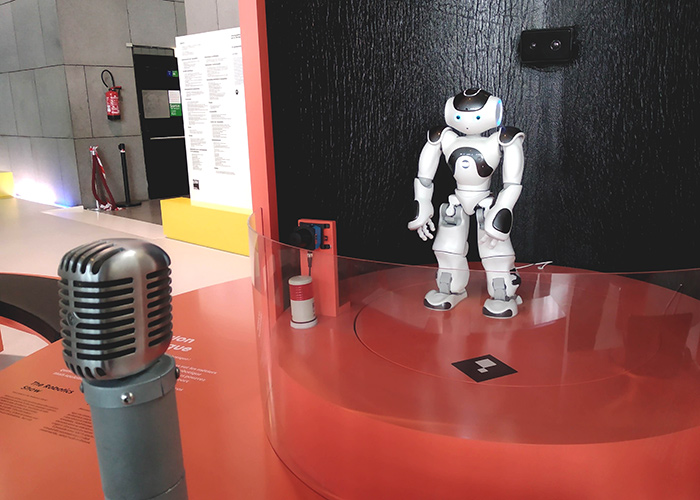
Museographical design: The robots are protected from visitors by a glass enclosure and are placed on a stage.
The Artificial emotions
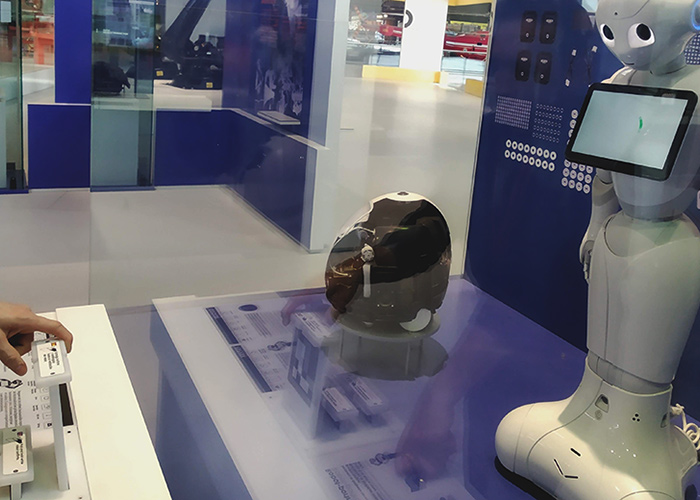
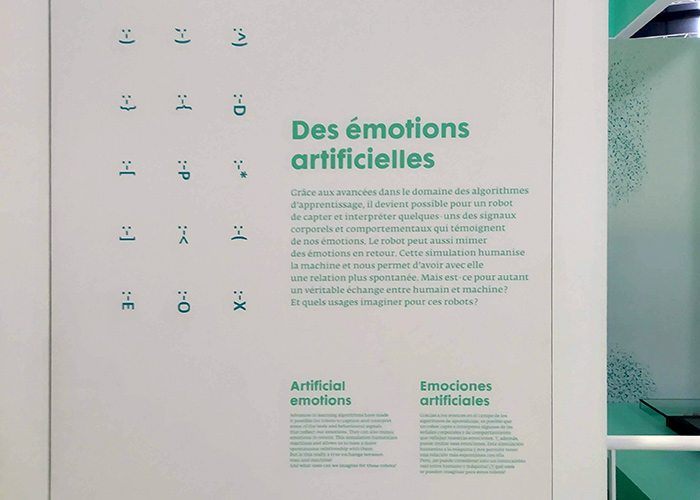
About: If men and robots share the same world, what kind of usage can we imagine for robots that have the ability to express their emotions and to perceive the emotions expressed by others? Roboticians have made a lot of progress these last few years, especially thanks to the developments in the field of learning, when it comes to grasping and interpreting verbal and behavioural signals indicating the emotional state of the person they are speaking to.
Synopsis: The visitor is invited to sit alone in front of Pepper, who is minimally animated and protected by a glass enclosure. Pepper is equipped with an emotional communication program: he perceives the emotions of his interlocutors by analyzing their facial expressions. The visitor is invited to look at Pepper, who sends back his emotional analysis: “I perceive joy/sadness/anger/surprise/a neutral state”. He expresses himself by speaking and displaying emoticons on his tablet.
The visitor’s face must be evenly lit. The time for which the visitor has to pose must be determined by a starting signal and an ending signal. Typically, a short sentence such as “Your ears look so nice!”. Silence is needed while Pepper analyzes data and displays the result.
Museographical design: The robot is protected from visitors by a glass enclosure and a guardrail. Removable seats are available for people with reduced mobility.
The robotic exhibition hosted by NAO
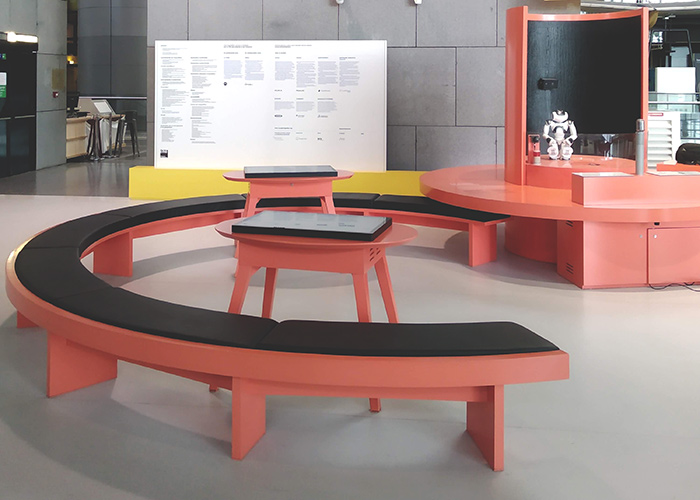
NAO welcomes visitors and introduces the various elements of the exhibition.
About: Museographic facility that deals with current topics and social activities in the field of robotics: news, jobs, culture, hobbies.
Synopsis: A NAO robot, the mascot of the place, welcomes the visitors and explains what they will find in the exhibition.
Seating areas can be found at the exhibition as well as reading desks that offer different activities (such as a visual game “Find the robots”, or graphic compositions about jobs in the field of robotics, upcoming training courses or reference books, etc.).
Museographical design: The robot is protected from visitors by a glass enclosure and is placed on a stage.
Related Content
Cité des Science Project Manager Interview
A Realistic approach of robotic behaviour development Questions to ask when designing, prototyping and producing robotic applications for a workable result - In this lesson, we are going to present the Robot Application Development process from a lead programmer's perspective: we will review the necessary first steps to take and the preliminary questions to ask in order to get a good idea of both the robotic ecosystem and the business concept so you can handle them realistically before starting the development of the application itself.
ROBOTS, an exhibition at the Cité des Sciences et de l’Industrie
The ROBOTS exhibition starts on the 2nd of April 2019 and will last for 5 years at the Cité des sciences et de l’Industrie (75019 Paris). Opening times: from Tuesday to Saturday 10.00 am - 6.00 pm, and 10.00 am - 7.00 pm on Sunday. Closed on Mondays and public holidays. Access: Cité des Sciences et de l'Industrie - 30, avenue Corentin-Cariou - F-75019 Paris. More details here